
The Supernatural in the Ordinary
Waide Riddle has a unique talent for turning simple moments into engaging stories. His writing vividly captures scenes, emotions, and ideas with clarity, drawing readers into the worlds he creates. Even in the short space of a story, Riddle builds atmosphere and character in ways that leave a lasting impact. His work often condenses complex human experiences—such as loneliness, memory, mystery, and the desire for connection—into brief yet powerful narratives. Through striking imagery and shifts in tone, his stories often mix the ordinary with the unexpected.
Two of Riddle’s short works, The Man in the Window and Barney and His Angel, showcase the variety of his storytelling. While both include supernatural elements, they explore the theme in notably different ways.
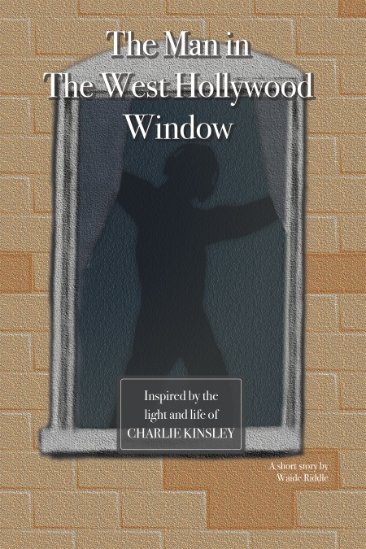 The Man in the Window
The Man in the Window follows Lea Denice, a young aspiring actress who recently moved to West Hollywood. While waiting for the bus each morning, she notices a mysterious man dancing behind a curtain in a nearby apartment window. Their silent exchanges gradually become a comforting ritual. When Lea investigates, she learns that the man, Charlie Kinsley, died many years earlier. Despite this, she continues to feel his presence, and circumstances eventually lead her to move into his former apartment, where the mystery surrounding him deepens.
The story combines realistic detail with subtle supernatural elements. Riddle’s vivid descriptions of West Hollywood and its cultural history create a strong sense of place, while Charlie’s lingering presence hints at the enduring spirit of community and memory. Instead of emphasizing fear, the story highlights connection, nostalgia, and the idea that traces of the past remain alive in the spaces once inhabited.
 Barney and His Angel
In contrast, Barney and His Angel depicts a much darker vision. Set in New York City on Christmas Eve, the story follows Barney Biff, a lonely accountant whose quiet holiday evening takes a horrifying turn after he buys a unique angel tree topper for his Christmas tree. After placing the angel on top of the tree, Barney relaxes into a cozy routine of holiday music and food. However, the peaceful mood is shattered when the angel transforms into a terrifying Angel of Death that violently attacks him.
Here, Riddle combines the familiar warmth of Christmas imagery—decorated trees, traditional music, and seasonal customs—to evoke a sense of comfort that is suddenly shattered by vivid supernatural horror. The contrast between joyful celebration and brutal terror gives the story its unsettling power, turning what starts as a peaceful holiday scene into a disturbing nightmare.
Taken together, these two stories showcase Waide Riddle’s talent for exploring the supernatural through very different emotional perspectives. In one, the unknown evokes nostalgia and connection; in the other, it becomes a source of fear and destruction. This contrast demonstrates the range of Riddle’s storytelling style and his willingness to experiment with tone, atmosphere, and theme. Whether reflective or terrifying, his stories remind readers that even the most ordinary moments—a bus stop encounter or a quiet Christmas evening—can open the door to something mysterious beyond explanation.
 The Night Elvis Kissed James Dean
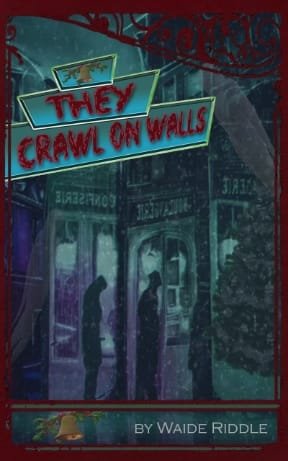 and
andBoth books are available as audio, narrated by award-winning voice artist Faris Monshi.
To find out more about Waide Riddle, visit
https://www.instagram.com/waideriddle/
https://www.imdb.com/name/nm0725779/